/

/

Metro line

Metro line

Location:

Latin America

Type of construction:

Bridge

Sensor type:

3D sensor

Bridge

Continuous monitoring of a metro bridge to detect movements and damage at an early stage.

These companies rely on our sensor technology

Logo: The Highway
DB
OeBB_INFRA logo
PORR Logo
STRABAG Logo
Asfinag_Logo
Intermetric Logo
Axpo logo
GalaxyCity Logo
BHOE Logo
Logo of the Diocese of St. Pölten
GEOSYS International Logo
City of Vienna logo
SalzburgAG logo
Logo-ZP
Logo-RETTER-and-Partners
Logo-Poettinger
Logo-NOE-Railways
Logo-NOE
Logo - HEIGL-BAU
Logo City Vienna
Pictures (10)
Pictures (9)

Background

In a metropolitan area in Latin America, a metro bridge needed to be monitored for movements and structural changes at several critical points. The bridge is part of a major public transportation network and is subject to high stresses due to daily use and changing environmental conditions. There was uncertainty regarding the causes and extent of movements in various structural components, which could potentially lead to high repair and operating costs. Initial damage had already been detected in the neoprene bearings.

Requirements

  • Early detection of abnormal movements and structural changes
  • Rugged, low-maintenance sensors with high measurement accuracy
  • Automatic Notification in Case of Anomalies
  • Flexible and quick installation without disrupting operations

Solution

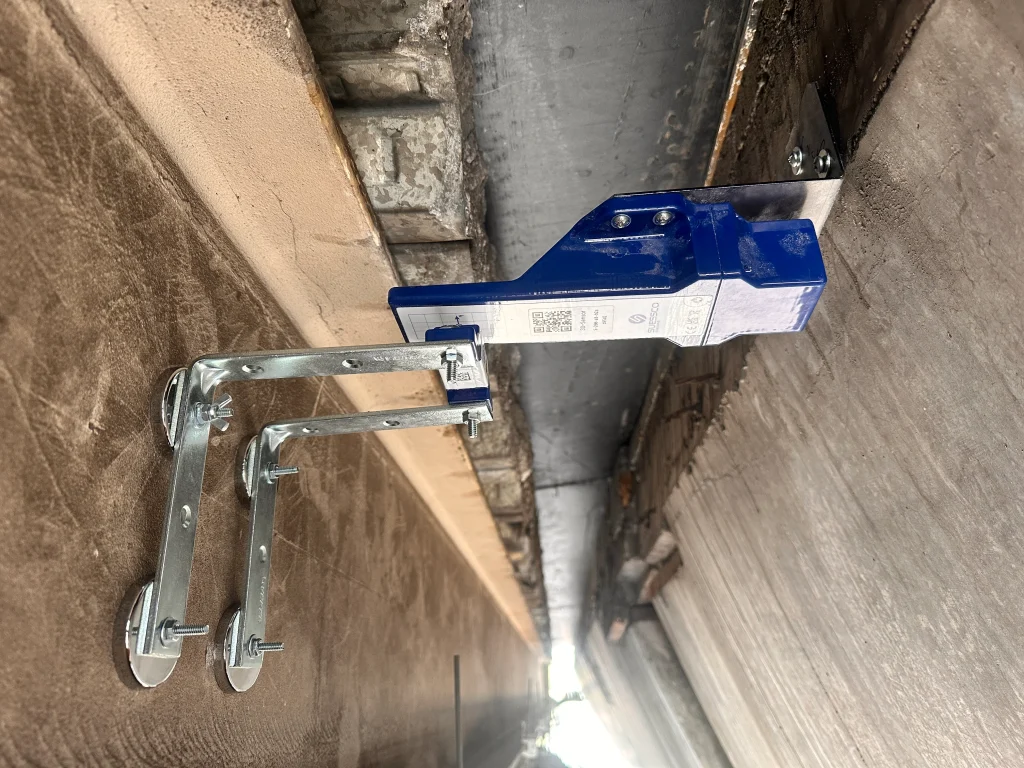
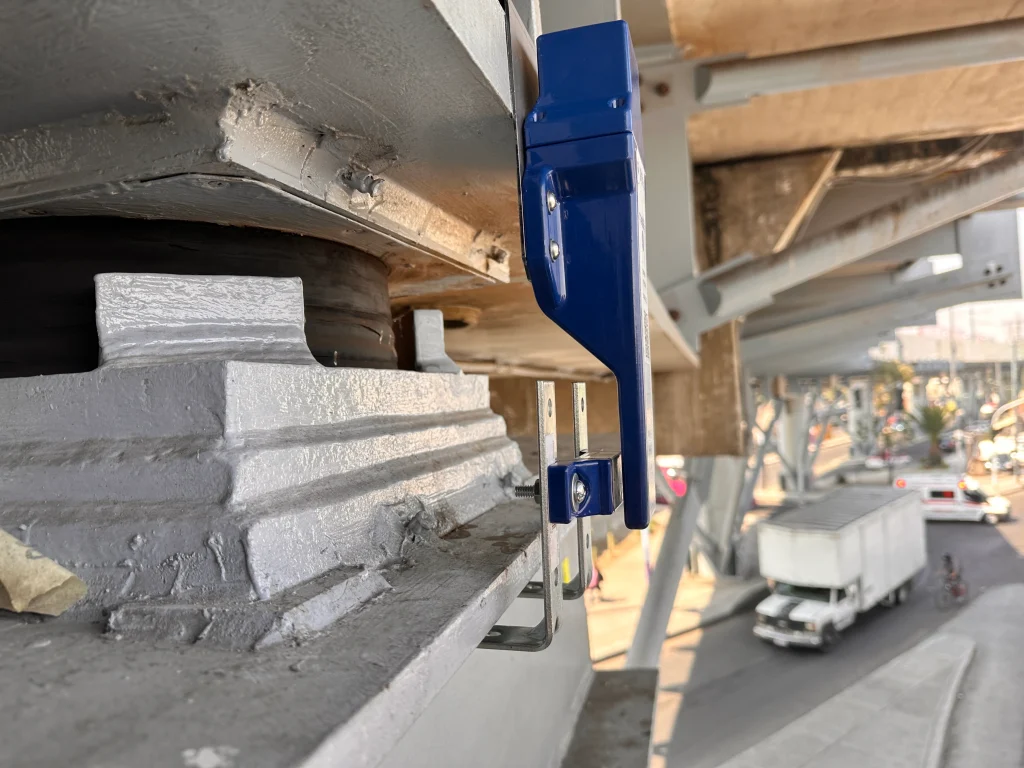
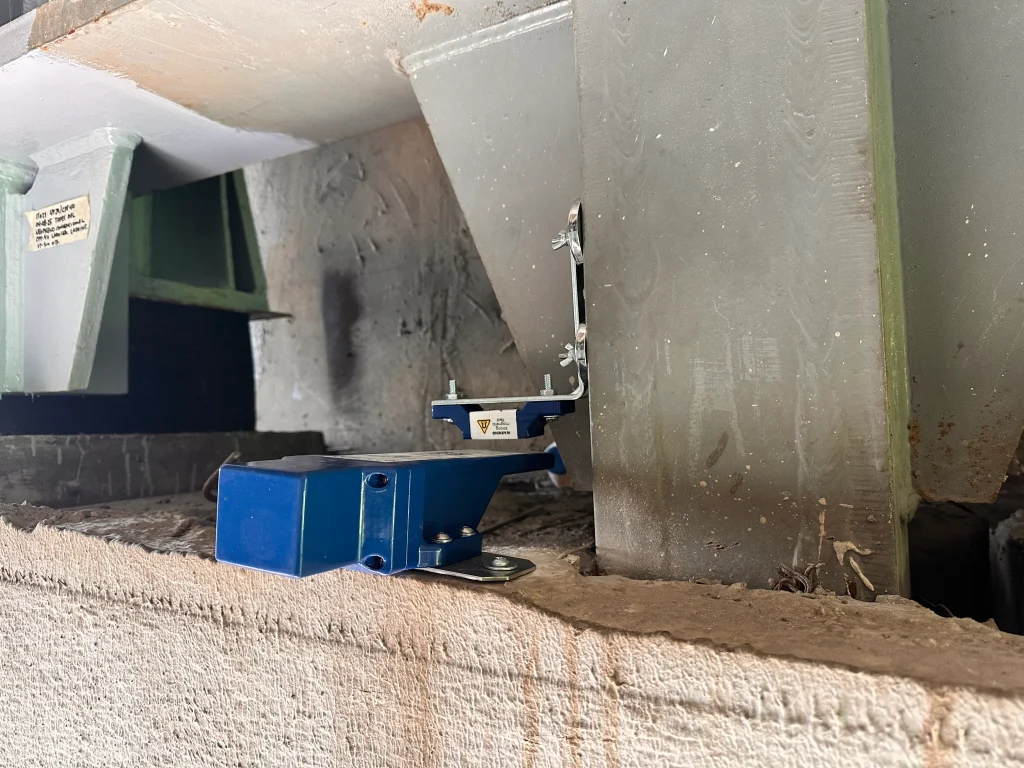
SuessCo 3D sensors were installed at key structural points along the metro line: on the viaduct supports, on a pedestrian bridge at a metro station, and on the neoprene bearings of the support structure. The sensors record three-dimensional movements as well as temperature trends. They enable the detection temperature-dependent movement patterns as well as long-term, irreversible displacements. Measurements are taken every two hours, while data transmission via LTE-M is carried out reliably.

Continuous monitoring provides important insights into the behavior of structural components.

  • Movements in the bridge bearings at the viaduct piers were detected as a result of subsidence in the submillimeter range.
  • At the pedestrian bridge near the metro station, shifts and trends were observed that indicate irreversible structural changes.
  • In the area of the neoprene bearings, the Z-axis exhibited cyclic, temperature-induced movements. At the same time, stresses were identified that had already caused visible damage to the neoprene.

The data collected enables early assessment of potential risks, targeted planning of maintenance measures, and sustainable improvements in the safety and availability of the infrastructure.


Let’s talk about your building

During the consultation, we’ll determine which sensors are right for your project and how quickly they can be installed. No obligation, no preparation required.

A man with his arms crossed and a smile