Home / Sensors / GNSS System
GNSS system

Structural Monitoring via Satellite Navigation

Digitally record absolute positional changes—with 2-millimeter accuracy. Suitable for bridges, dams, buildings, and retaining walls.

GNSS system Patented

These companies rely on our sensor technology

Default Title
Default Title
Default Title
Default Title
Default Title
Default Title
Default Title
Default Title
Default Title
Default Title
Default Title
Default Title
Default Title
Default Title
Default Title
Default Title
Default Title
Default Title
Default Title
Default Title
Default Title

Applications of the GNSS system

Large-scale use cases that do not have their own detailed solution page within the current sitemap scope. A dedicated "Geomonitoring" solution page is noted as an open item in sitemap.md.

Slope movements and retaining walls

Multiple sensor points along a slope detect movements over long distances. Early detection of landslides and subsidence.


Slope movements and retaining walls

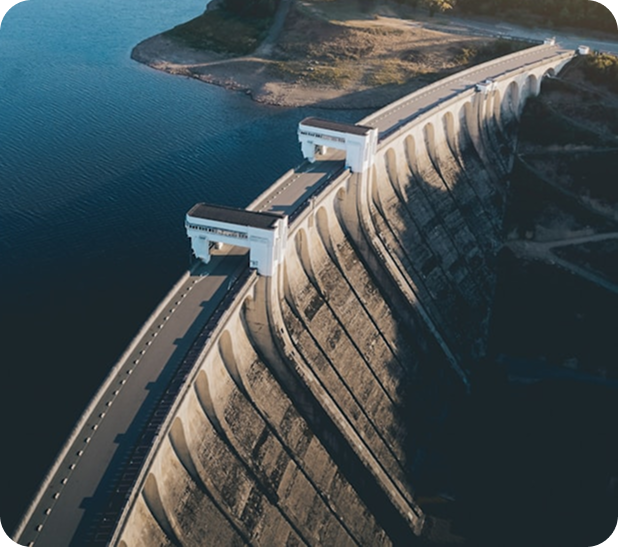
Dam Monitoring

Wide-area monitoring of dam geometry using antennas at multiple points. Suitable for arch and gravity dams.
Dam Monitoring

Construction Phase Monitoring

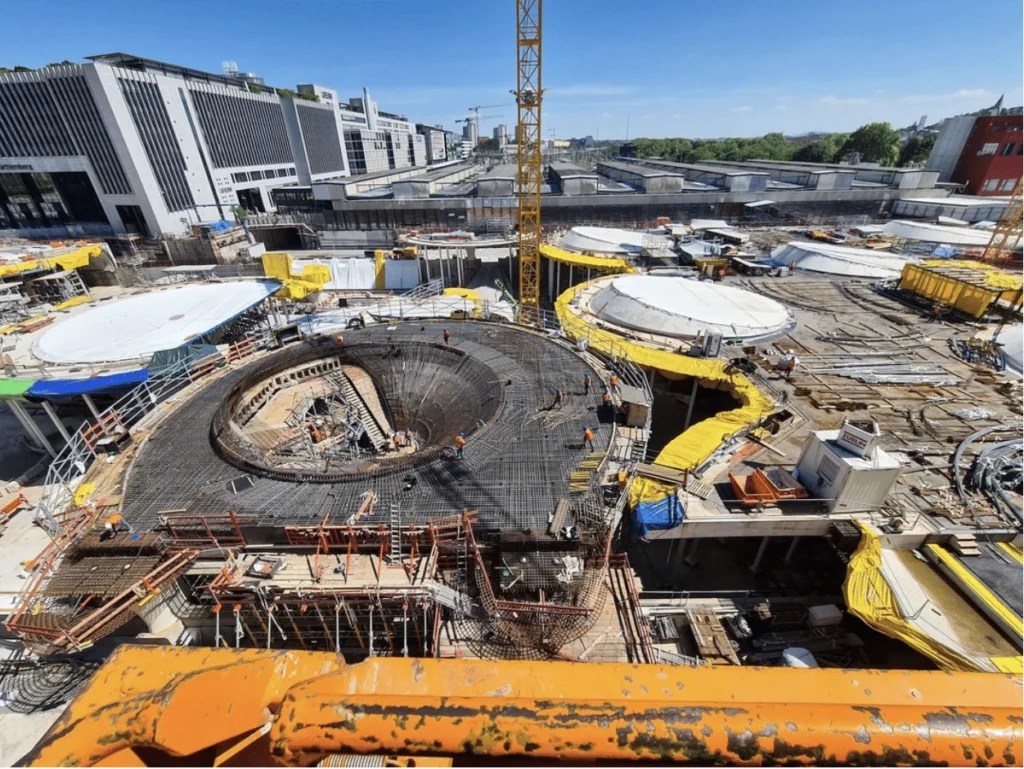
For large-scale projects involving civil engineering, vibrations, and settlement over several hundred meters, the GNSS system tracks movements over a wide area.

Construction Phase Monitoring

Long-span bridges

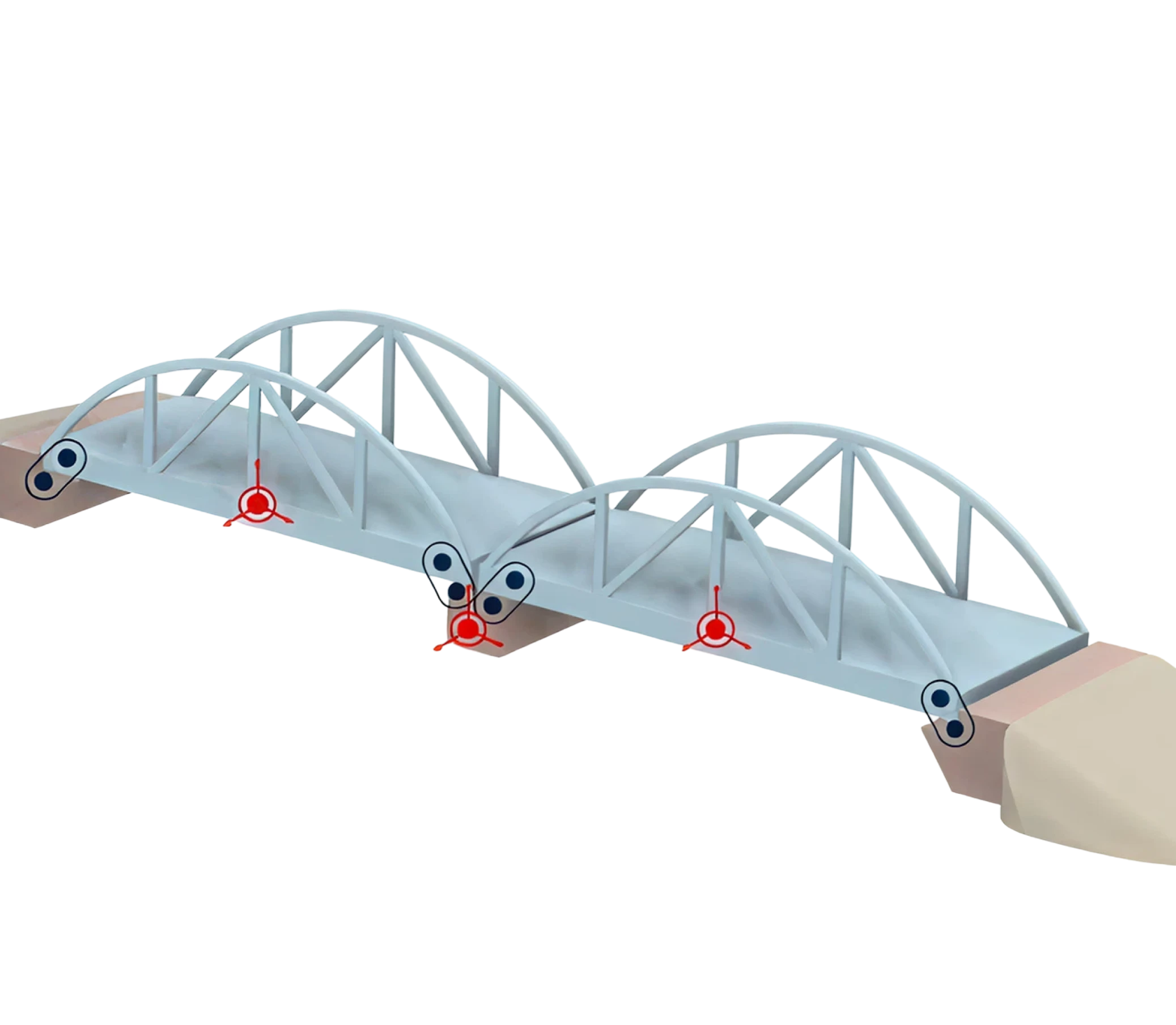
For particularly long bridges, the GNSS system supplements point measurements taken with 6D or 3D sensors to provide a large-scale geometric analysis.

Long-span bridges

What's changing for you

Wide-ranging

Wide-ranging

Multiple sensor points distributed across the entire structure or site, with data analyzed collectively in the data hub. Suitable for structures spanning several hundred meters.

Datahub Dashboard

All measurement data in a single dashboard. CSV export for structural engineers and reports, API integration for third-party sensors, and multi-tenant support for complex projects.

Datahub in Detail
Absolute position

Absolute position

Each sensor point provides its position relative to a fixed reference point. Ideal for monitoring slope movements or settlement over long distances.

Wirelessly connected

Wirelessly connected

Data is transmitted directly to the data hub via NB-IoT and LTE-M. Also suitable for remote locations without an on-site power grid.

Early warning

Early warning

If a threshold is exceeded, our system automatically sends an email notification.

Key Features

GNSS system
Position measurement via satellite navigation in three spatial axes
Repeatability: 1.3 mm horizontally, 2 mm vertically
Multiple sensor points with a fixed reference for relative motion analysis
Wireless data transmission via NB-IoT and LTE-M
Power supply via the grid or solar panels with a backup battery
Connection to the monitoring platform with alarm functionality
Position measurement via satellite navigation in three spatial axes
Repeatability: 1.3 mm horizontally, 2 mm vertically
Multiple sensor points with a fixed reference for relative motion analysis
Wireless data transmission via NB-IoT and LTE-M
Power supply via the grid or solar panels with a backup battery
Connection to the monitoring platform with alarm functionality

What the GNSS system measures

Dimensions
Key figures
Data collection

Antenna:

10 × 8 × 2 cm

Storage unit:

30 × 20 × 15 cm

Transmitter unit:

45 × 40 × 15 cm

Accuracy X, Y:

1.3 mm

Accuracy Z:

2 mm

Terms and Conditions:

At least three sensor points, a fixed reference point within a radius of approximately 2 km, and optimal satellite reception

Power supply:

Grid-connected or photovoltaic with a backup battery

Measurement interval

Data collection is continuous; analysis is performed once a day, and results are reported over a 24-hour period

Data transmission:

NB-IoT, LTE-M, monitoring platform

Data Sheet – SuessCo GNSS System

Download the brochure

Real-world projects

Selected projects using the GNSS system.

May1

Brentenberg Tunnel

Real-time structural monitoring following a tunnel fire to enable rapid reopening during ongoing restoration work.

Building:
Tunnel
Location:
Austria
Sensors:
3D sensor
Read the case study
Brentenberg Tunnel

Rastatt Tunnel

Wireless 3D measurement of concrete segments in tunnel construction.

Building:
Tunnel
Location:
Germany
Sensors:
3D Sensor XT
Read the case study
Rastatt Tunnel

Stuttgart 21

Continuous monitoring of structural movements in the historic reception building during the critical construction phase

Building:
Historic train station building
Location:
Stuttgart, Germany
Sensors:
6D sensor, GNSS sensor
Read the case study
Stuttgart 21

Residential building

High-precision building monitoring of settlement and crack development to assess damage caused by subway construction work.

Building:
Historic building
Location:
Central Europe
Sensors:
3D sensor, 6D sensor, GNSS sensor
Read the case study
Residential building

Danube Bridge

Monitoring of bearing and abutment movements and structure temperature during operation.

Building:
steel bridge
Location:
Lower Austria
Sensors:
6D sensor
Read the case study
Danube Bridge
May1

What our customers say

/
FAQ

Frequently Asked Questions About the GNSS System

GNSS is the right choice for large-scale monitoring over distances of several hundred meters, such as for slope movements, dams, extensive construction phases, or long-span bridges. If movement at a single measurement point needs to be recorded with micrometer-level accuracy, magnetic field sensors (2D, 3D, 3D-XT, 6D) are the more suitable choice.

Several antennas are distributed around the structure, and an additional antenna serves as a fixed reference point within a radius of about two kilometers. The position of each antenna is calculated relative to the reference point. Changes over time reveal the structure’s movement relative to the fixed point.

Repeatability: 1.3 mm in the horizontal plane (X, Y) and 2 mm in height (Z). These values apply provided there are at least three sensor points, a fixed reference point within a radius of approximately 2 km, and good satellite reception.

At least three sensor points and one fixed reference point. Depending on the size of the structure and the resolution requirements, it may be advisable to use more points. We will discuss the exact configuration during a consultation based on your project requirements.

The GNSS system is not battery-powered. It is powered either by a mains connection or by a photovoltaic system with a backup battery for remote locations without access to the power grid.

The GNSS system transmits data wirelessly to the data hub via NB-IoT and LTE-M. Wi-Fi is not supported here. In areas with limited cellular coverage, NB-IoT is used due to its greater range.

Using the GNSS system for your project

During the consultation, we’ll help you determine whether GNSS is suitable for a project of your scale and how many sensor points are appropriate for your application.