/

/

ÖBB Suspension Bridge

Bridge Bearing Monitoring on a Historic Steel Bridge

Location:

Limberg, Lower Austria

Type of construction:

ÖBB Suspension Bridge

Sensor type:

6D sensor

Blue circle with a target

Railway bridge

Bridge Bearing Monitoring on a Historic Steel Bridge

These companies rely on our sensor technology

Logo: The Highway
DB
OeBB_INFRA logo
PORR Logo
STRABAG Logo
Asfinag_Logo
Intermetric Logo
Axpo logo
GalaxyCity Logo
BHOE Logo
Logo of the Diocese of St. Pölten
GEOSYS International Logo
City of Vienna logo
SalzburgAG logo
Logo-ZP
Logo-RETTER-and-Partners
Logo-Poettinger
Logo-NOE-Railways
Logo-NOE
Logo - HEIGL-BAU
Logo City Vienna
Pictures (10)
Pictures (9)
Part of a bridge structure

Background

The bridge in Lower Austria, which is more than 100 years old, posed a particular challenge for ÖBB. Because the bridge is located on a slope, geological movements were suspected. However, the methods used to date did not allow for continuous monitoring of potential movements. 

6D Sensor Angle Case

Requirements

ÖBB was looking for a technical solution that would enable continuous monitoring of the bridge in order to detect changes caused by geological movements in the slope at an early stage. This needed to be possible without the need for time-consuming and temporary on-site inspections by its own staff, so that measures could be taken in a timely manner.

6D Sensor Bridge

Solution

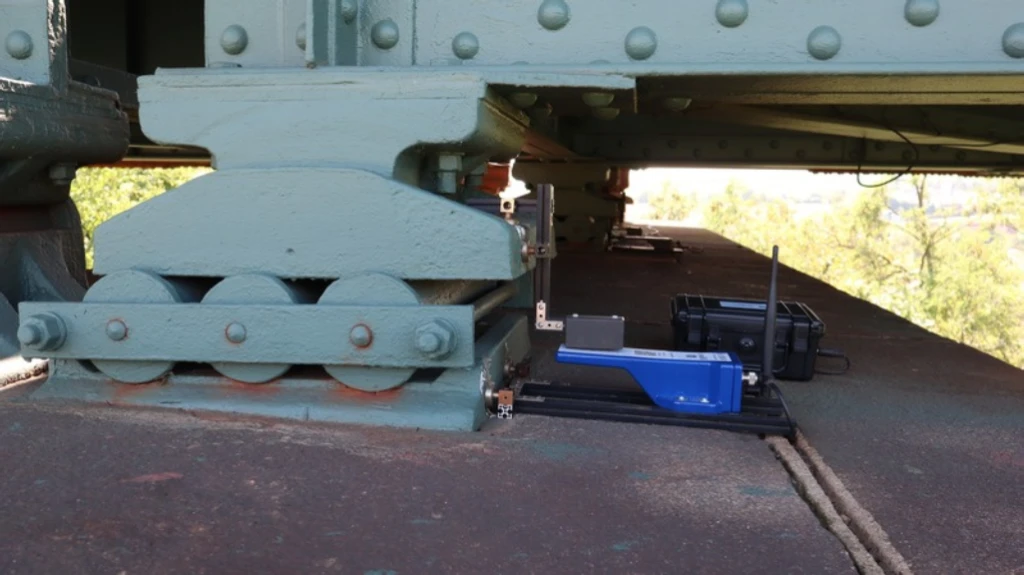
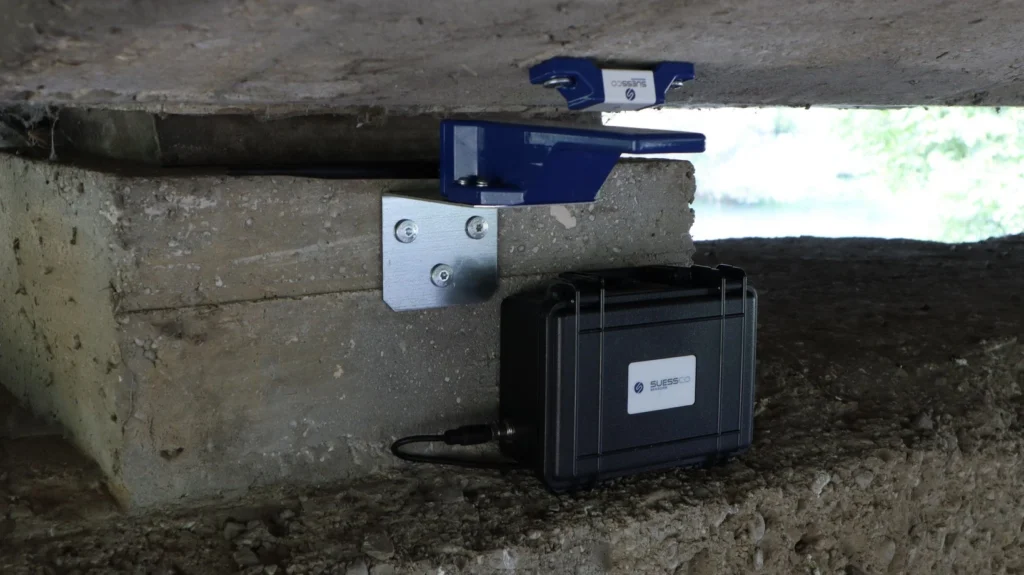
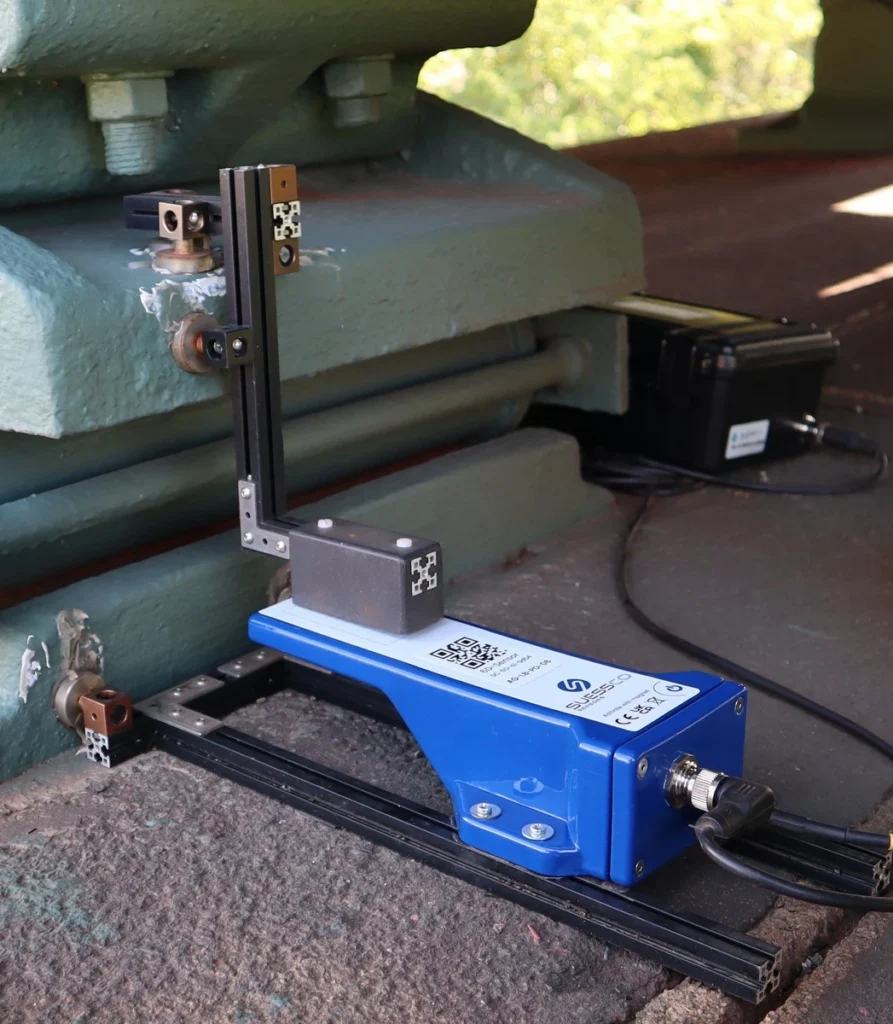
To continuously monitor the bridge, a SuessCo 6D sensor was installed at each of the six bridge bearings. These sensors are combined with built-in temperature sensors and provide precise real-time measurement data that can be accessed via a user-friendly dashboard. This enables ÖBB officials to continuously monitor changes and movements in the bridge without the need for time-consuming on-site inspections.

The sensors were used to monitor the bridge bearing over a period of several years. The X-axis exhibited the expected movements, while the Y- and Z-axes remained stable. Particularly notable was the “problem bearing” at the apex of the bridge, which exhibited shear movements attributable to rail expansion.

This detailed, continuously collected data enables more precise analysis and early detection of potential problems, thereby reducing the costs and effort associated with manual inspections and significantly improving the quality of monitoring.



Until now, we have been inspecting the bridge bearings on-site. With the SuessCo 6D sensors, we always have up-to-date measurements available. That’s our advantage—it saves us money, of course, and ensures higher quality.

Georg Gotthart

Plant Technician, Bridge Construction, ÖBB

Let’s talk about your building

During the consultation, we’ll determine which sensors are right for your project and how quickly they can be installed. No obligation, no preparation required.

A man with his arms crossed and a smile